Houston

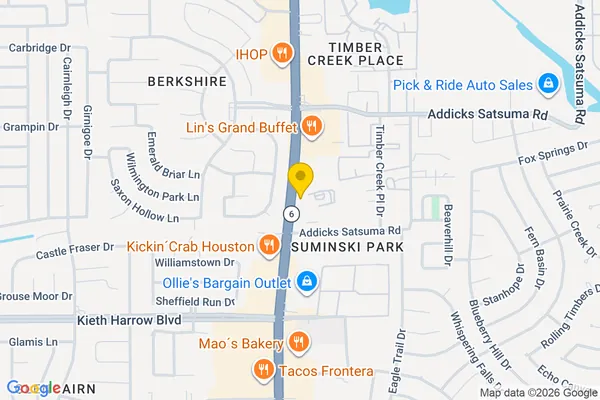
(281) 463-8079

5118 Hwy 6 N, Houston, TX 77084

Mon – Fri: 8 a.m. to 6 p.m.
Sat: 8 a.m. to 5 p.m.

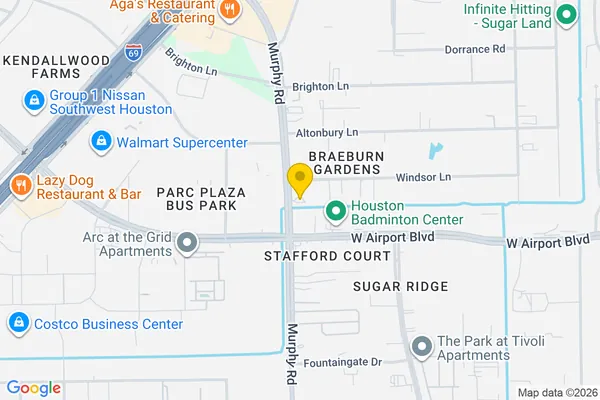
Stafford

(281) 879-0843

12319 Murphy Rd, Stafford, TX 77477

Mon – Fri: 8 a.m. to 6 p.m.
Sat: 8 a.m. to 5 p.m.

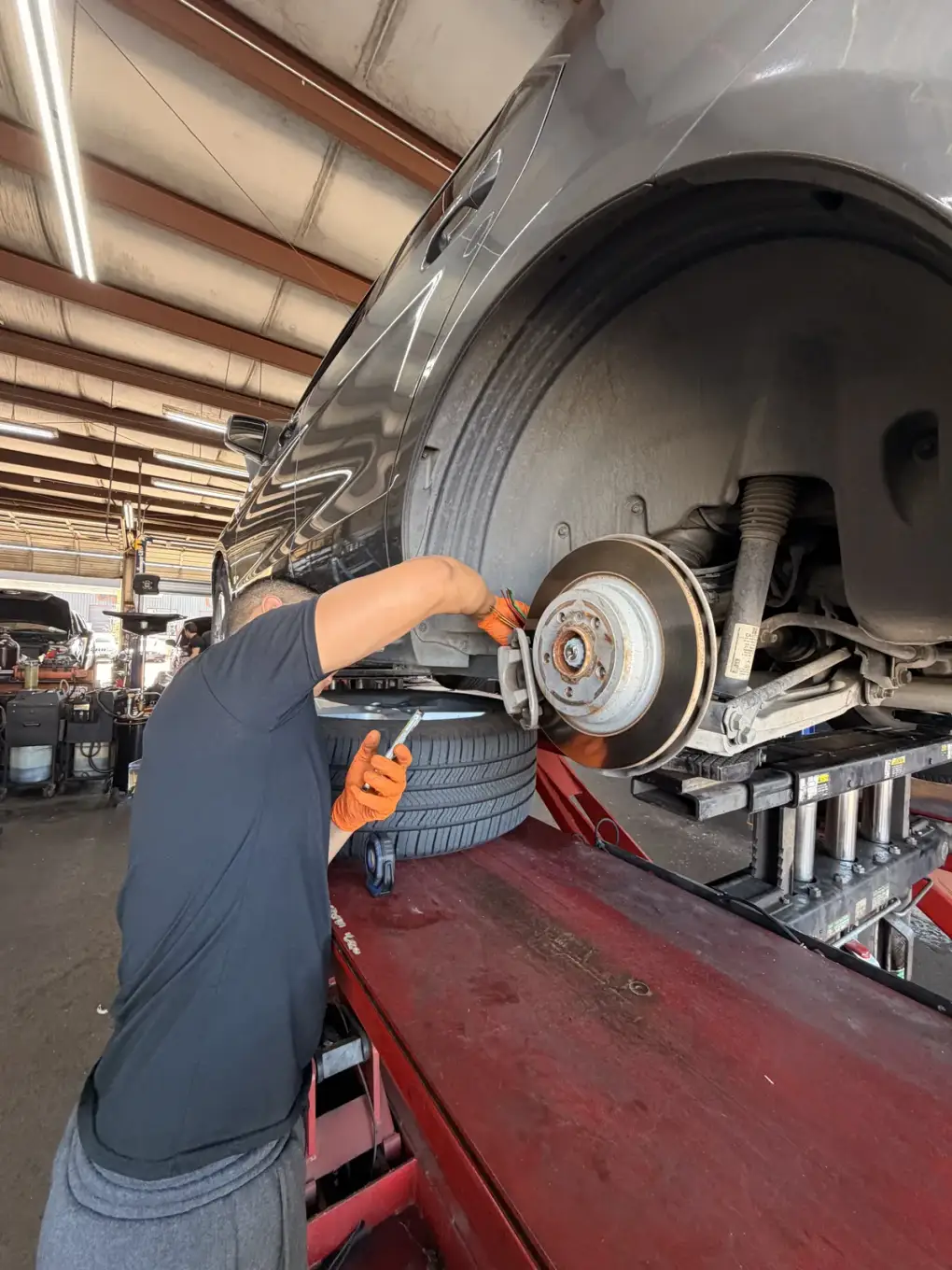
Mechanic working on car disc brake assembly. Southwest Muffler & Brake, Stafford and Houston.

Brakes

We do brake repair for cars and pickups at 12319 Murphy Rd in Stafford and 5118 Hwy 6 N in Houston.

Updated

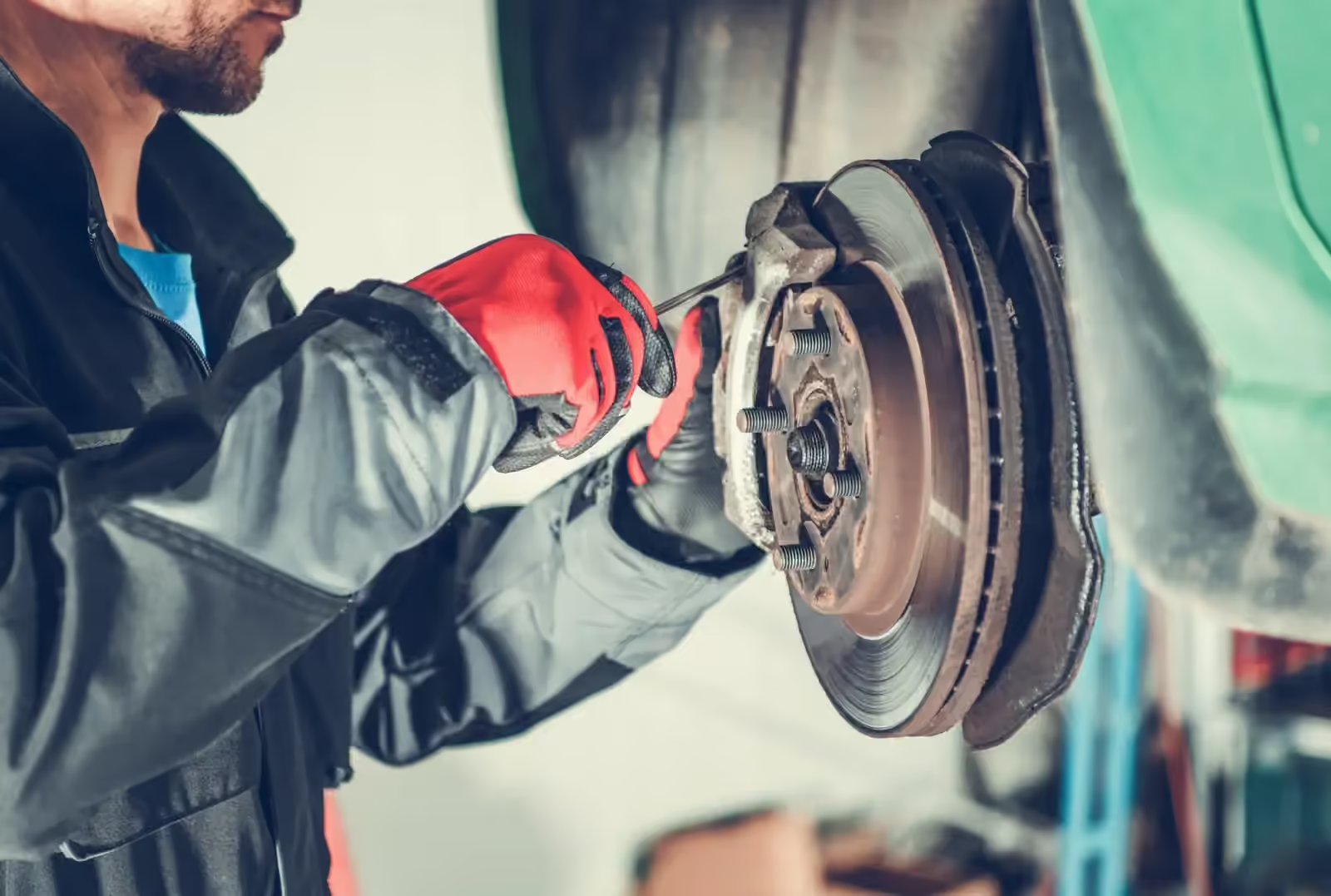
Technician working beside the exposed brake rotor of a raised car at Southwest Muffler & Brake in Stafford.

What we do for brake repair

We fix brakes that squeal, grind, shake or feel soft. Between our two shops, we've handled more than 18,000 brake repair visits, at Stafford since 2000 and at Houston since December 2023. The makes we see most for brake repair are Ford, Chevrolet and GMC.

A brake repair makes more sense once you know what happens when you press the pedal. Your foot pushes fluid out of the master cylinder, the small pump mounted behind the pedal. That fluid travels through steel lines and rubber hoses to each wheel. At a disc brake, the fluid pushes pistons inside the caliper, and the caliper squeezes two pads against a spinning metal rotor. At a drum brake, a wheel cylinder pushes curved shoes out against the inside of a metal drum.

Either way, friction turns the motion of your car into heat, and the wheels slow as that energy leaves. So a brake problem usually traces back to one of two places. Either the friction parts at the wheel are worn or damaged, or the fluid side can't build and hold steady pressure.

Exterior of Southwest Muffler & Brake shop and garage bays, Stafford and Houston.

Signs you need brake repair

A thin, high squeal on light stops often comes from brake pads that are running low on lining. Some pads have a small steel clip set at the depth the lining reaches near the end of its life. When the lining wears down to that depth, the clip rubs the rotor and makes the noise. Brake dust or a glazed pad can squeal too, so the sound alone doesn't confirm the pads are worn.

Grinding when braking usually means the pads are worn through. Have the vehicle inspected before continuing to drive it. With no lining left, the pad's metal base rubs the rotor directly. That metal-on-metal contact cuts grooves into the rotor and makes more heat at that wheel.

A steering wheel that shakes under braking most often points to warped rotors. Schedule an inspection soon and avoid hard braking until it's checked. A rotor that's uneven in thickness, or that wobbles as it turns, makes the pads grab and release many times a second. You feel that as a shake in the wheel or a pulse in the pedal.

A soft or sinking brake pedal is a safety issue. Do not drive the vehicle. Have it towed or inspected immediately. Brake fluid has to hold firm pressure under your foot. Air in the lines, or fluid that boils from hard use, leaves bubbles that squeeze down easily, and the pedal feels spongy. A worn seal inside the master cylinder can also let pressure slip away, so the pedal slowly drifts toward the floor.

A car that pulls to one side when you stop has uneven braking force across one axle. If a caliper slide pin sticks, or one corner loses pressure, that wheel clamps with less force. The car then pulls toward the side that's gripping harder. A pull can have other causes too, so it takes a look at the car to know which one you have.

Why local driving is hard on brakes

Heavy rain puts water, grit and hidden hazards right where your brakes do their job.

When heavy rain hits, Texas roads can flood fast, with standing or moving water, debris and damage you can't see under the water.

  • Standing or moving water reaches the pads and rotors. A wet rotor grips less until the pads wipe it dry, so the first few stops after deep water can feel weak.
  • Muddy floodwater can wash past the rubber boots that seal grease around the caliper's guide pins. Once that grease is gone, the caliper can bind on its pins and fail to back off after a stop, which can show up as a hot smell or a pad that's thinner on one side.
  • Road debris can get kicked up and caught between the rotor and its thin metal dust shield. A trapped stone scrapes as the wheel turns and can score the rotor face.
  • Hidden roadway damage under the water can bend wheels and knock suspension parts out of place. If you hit something hard, have those parts checked. We do suspension and steering repair too.

What's included in brake repair

A brake repair covers the friction parts at the wheels and the hydraulic system that drives them. Which of these your car needs depends on how worn they are and what shape the fluid is in.

  • Brake pads are friction material bonded to a steel backing plate. The lining wears a little with each stop, as friction slows the spinning wheel.
  • Rotors are smooth metal discs that turn with the wheel. The pads clamp both flat faces to stop the car.
  • Calipers are the hydraulic clamps that sit over each rotor. Pistons inside them push the pads against the rotor when fluid arrives under pressure.
  • Drums and shoes do the braking at the rear on some cars and many pickups. Curved shoes press out against the inside of a turning drum.
  • Brake fluid fills the lines between the master cylinder and every wheel. When you press the pedal, it pushes on the caliper pistons and wheel cylinders. Over time it soaks up moisture from the air, which lowers its boiling point and can soften the pedal.

In September 2026, we did brake fluid flushing and bleeding on a 2013 Ford Transit Connect. Flushing swaps old fluid in the lines for fresh fluid, and bleeding pushes trapped air out at each wheel. Fluid doesn't compress and air does, so a system with air in it can give you a soft pedal.

How brake repair options compare

Disc brakes sit on the front of most cars today. Some cars and many pickups still use drums on the rear axle. The maker decides which design your vehicle has, and the two age in different ways.

Disc brakes leave the rotor out in open air. That lets them shed heat fast during repeated stops, and it makes the pads and rotors easy to see and reach. Drum brakes enclose the shoes inside a metal drum. The drum keeps out some mud and gravel. It also holds heat in during long, heavy stops, such as towing or hauling a load. Drums carry springs, an adjuster and a wheel cylinder, so a drum job can involve more small parts.

The second choice comes up when your brake fluid reservoir runs low. You can top it off, or you can find out why it's low. Brake fluid isn't burned up the way fuel is. The level drops a little as pads wear, because the caliper pistons sit farther out and hold more fluid. A bigger drop usually means fluid is getting out through a hose, a line, a caliper seal or a wheel cylinder.

Topping off a leaking system only buys time. The fluid keeps escaping, and the pedal can get softer as the level falls. Fixing the leaking part and bleeding the lines deals with the cause. That's the repair to plan for when the level keeps dropping.
How we inspect before brake work

  1. Bring your car or truck to the shop closer to you, in Stafford or Houston.
  2. Tell us what you've noticed. Describe the noise, how the pedal feels and when it happens.
  3. You get a written estimate before any work begins.

Detail in step two helps. A squeal only on damp mornings and a grind on every stop point us toward different parts. It also helps to say whether the noise comes from the front or the back, and whether the car pulls or the wheel shakes when you slow down.

What brake repair costs

A pad replacement on one axle is the smallest brake job, and each added part or axle raises the bill.

  • How many axles need parts. Front brakes usually wear faster than rear brakes. A job on both axles means two sets of pads or shoes and the labor for each.
  • Rotor or drum condition. A rotor that's smooth and thick enough can stay on your car. One that's grooved, heat-spotted or below its minimum thickness needs replacing, which adds a part at each wheel on that axle.
  • Waiting until it grinds. Pads worn down to the backing plate cut into the rotor. A job that could have been pads alone then becomes pads and rotors.
  • Hydraulic repairs. A leaking hose, a stuck caliper or a worn wheel cylinder means another part. Opening the lines lets air in, so they need bleeding after the repair.
  • Disc or drum design. Rear drums use shoes, springs and adjusters, which is a different parts list from disc pads.
  • Vehicle size and use. A heavy pickup carries larger rotors, pads and calipers than a small car, and larger parts cost more. If your truck tows or hauls, we also handle pickup truck repair.

Your written estimate lists the parts your car actually needs, so you can see which of these apply to you.

Why people here choose us for brake repair

Our Houston shop has 4.6 stars from more than 400 Google reviews. Houston brake customers have left 11 reviews, averaging 5.0 stars.

Our Stafford shop has 4.5 stars from more than 500 Google reviews. Stafford brake customers have left 24 reviews, averaging 4.4 stars.

  • Stafford shop

    Mr Chris , thank you for being a good listener to the concern about labor cost on my brake repair issue . I am very happy we were able work out the issue . You did an excellent job in understanding. I am very pleased with the work done on the Honda .

    Brenda, Rated 5 out of 5 stars
  • Houston shop

    Very nice people are awesome. Goose is. Very nice to all. Going back to get my front brakes done. Charlotte

    charlotte, Rated 5 out of 5 stars
  • Stafford shop

    Went in for brake replacement. These guys took great car of me and my car. Made sure I had transportation to and from the shop and even test drove my car with me after. Very reliable and trustworthy group of guys, would definitely recommend.

    Jayden, Rated 5 out of 5 stars

Frequently asked questions

Which areas do you serve for brake repair?

We do brake repair for drivers in Houston and Stafford. We have one shop in each city, and both handle brake repair.

Which shop should I go to?

Go to whichever shop is closer: our shop on Murphy Rd in Stafford or our shop on Hwy 6 N in Houston.

Can I drive if the ABS light turns on?

An ABS light means anti-lock braking is disabled but normal braking still works. Drive cautiously and have it diagnosed soon. Anti-lock braking keeps the wheels from locking in a hard stop. A sensor at each wheel reads how fast it turns. A dirty sensor or damaged wiring is one common reason the light comes on.

What causes a burning smell from one wheel?

A hot smell from one wheel usually means a brake at that wheel is dragging. A stuck caliper piston or slide pin can keep the pad pressed on the rotor after you lift your foot. A parking brake that doesn't fully release can do the same thing. The drag overheats the pad and rotor and wears them faster, so have that wheel looked at.

Do I need new rotors every time I get new pads?

No. A rotor that's smooth and still above its minimum thickness can stay on with new pads. A rotor that's grooved, heat-spotted or too thin gets replaced, because new pads won't seat well on a damaged face. The condition of your rotors decides it.

Why do my brakes squeak in the morning?

Damp air overnight can leave a thin film of rust on the rotor faces. The pads scrape it off on the first few stops, and the noise usually fades after that. A squeal that lasts all day can mean the pad wear clips are touching the rotors, and the pads should be checked.

Schedule brake repair

Call us, or send us a message.