
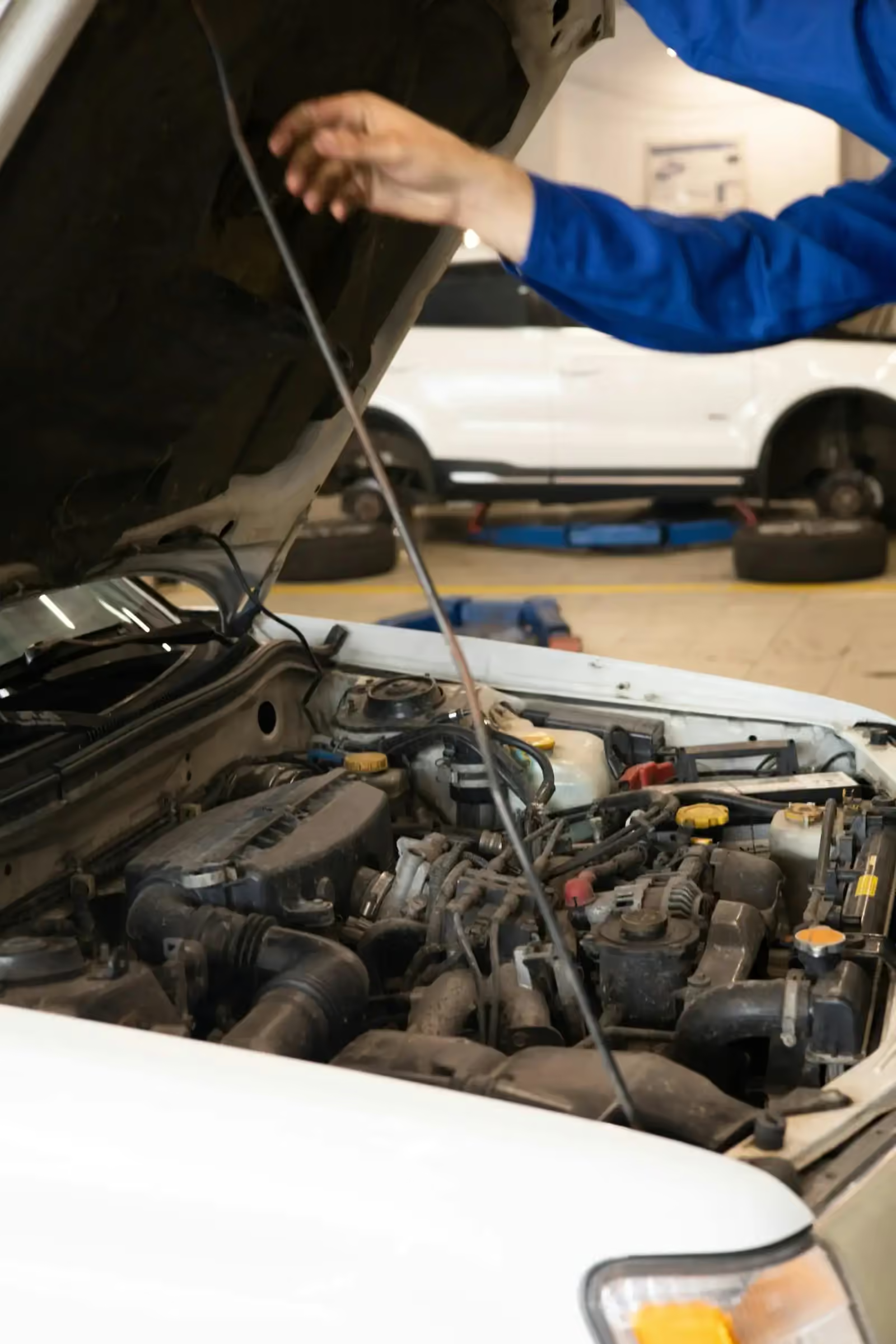
Auto repair services
Updated
Our main services
- If the car drifts to one side or the steering wheel sits crooked on a straight road, start with a wheel alignment.
- Warm air from the vents or weak airflow on a hot afternoon is a job for auto air conditioning service.
- Squealing when you stop or a brake warning light on the dash means it's time to have the brakes looked at.
- Bouncing over bumps, body sway in turns or loose steering points to suspension and steering repair.
- A service reminder on the dash or a mileage mark in your owner's manual is the cue for maintenance and general service.
- A rear end that sags under a heavy load, a shudder from the driveline or a bed that sways belongs with pickup truck repair.
- A loud rumble under the floor, an exhaust smell in the cabin or a buzzing rattle underneath calls for muffler, exhaust and catalytic converter repair.
State emissions inspection
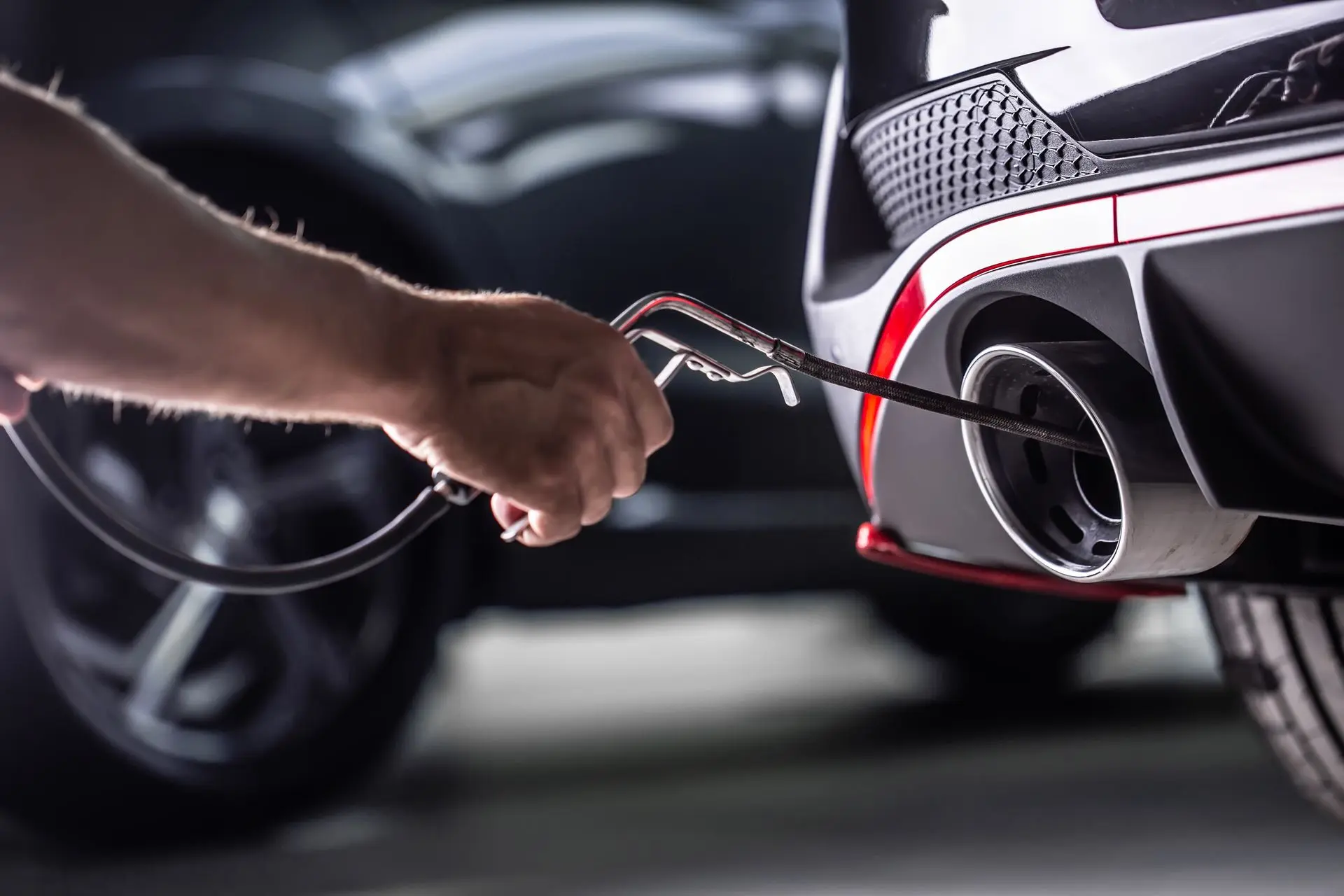
Texas ended the yearly safety inspection for cars and light trucks on January 1, 2025. The emissions test did not end. A gasoline car or truck that is 2 to 24 years old and registered in Harris or Fort Bend County still needs one every year, and a lit check engine light fails it. Both of our shops do the test.
Diagnostics and check engine light
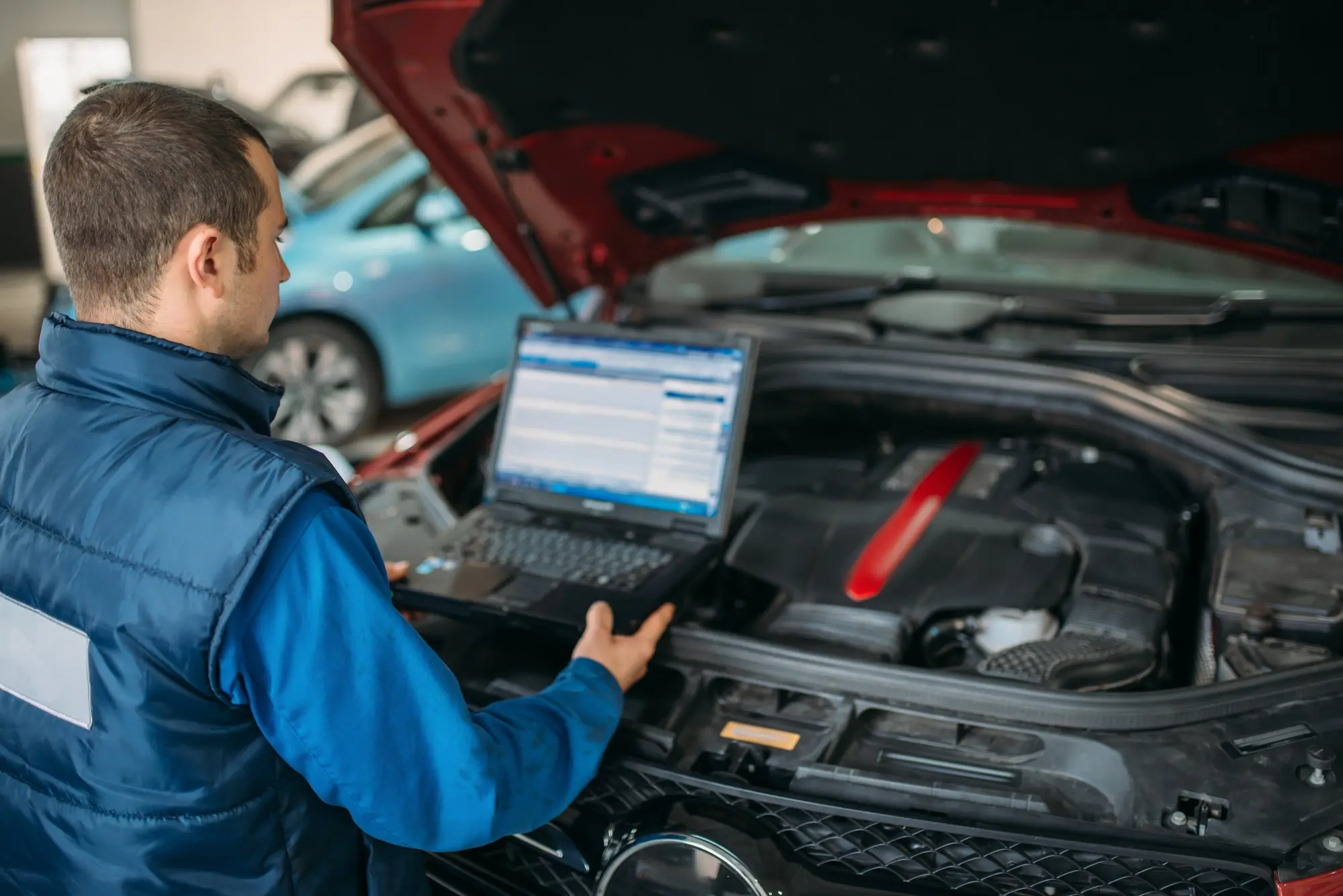
A check engine light comes on when the engine computer sees a sensor reading outside its normal range. How the light behaves decides what you do next. A solid check engine light with no drivability symptoms usually allows you to drive to a shop, but have it diagnosed promptly. A flashing check engine light indicates an active misfire that can damage the catalytic converter. Stop driving and have the vehicle inspected.
Diagnosis starts with the trouble codes the computer stores. A code tells you which circuit or system reported a problem. It doesn't name the broken part. That takes testing the wiring and the sensors on that circuit, and watching live data while the engine runs. Readings like fuel trim, which is how much fuel the computer adds or takes away, can separate a failed sensor from a vacuum leak, an unmetered air leak into the engine. You need diagnostic testing when a warning light stays on, the engine stumbles or your fuel mileage drops for no clear reason.
Engine repair
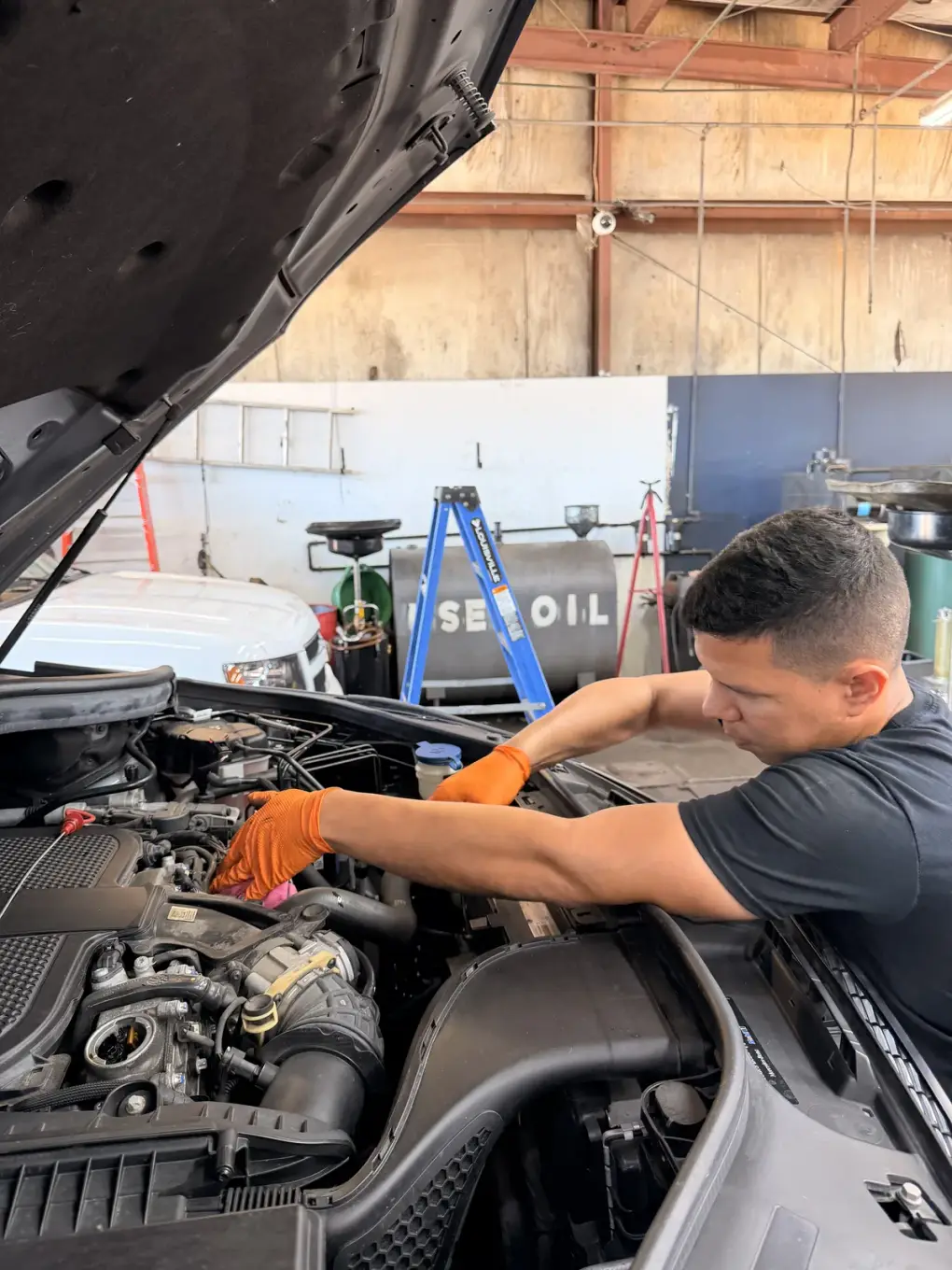
An engine runs on tight seals, correct timing and clean oil. Gaskets and seals keep oil and coolant in their own passages. Years of heat can harden a valve cover gasket until oil seeps past it and drips onto hot metal. You'll smell something sharp and burning, and the oil level drops between changes. Left alone, that oil can soften nearby rubber hoses and coat wiring.
Timing belts and chains keep the camshaft and crankshaft in step, so the valves open at the right moment. A worn belt or a stretched chain throws that timing off. The result is a rough idle, weak power and misfires. On an interference engine, the valves and pistons share space, so a snapped belt lets the pistons strike open valves and bend them.
Two other signs are worth knowing. A deep knock from the bottom of the engine can mean worn rod bearings, and it needs attention quickly. Blue smoke from the tailpipe means oil is getting past worn piston rings and burning in the cylinders.
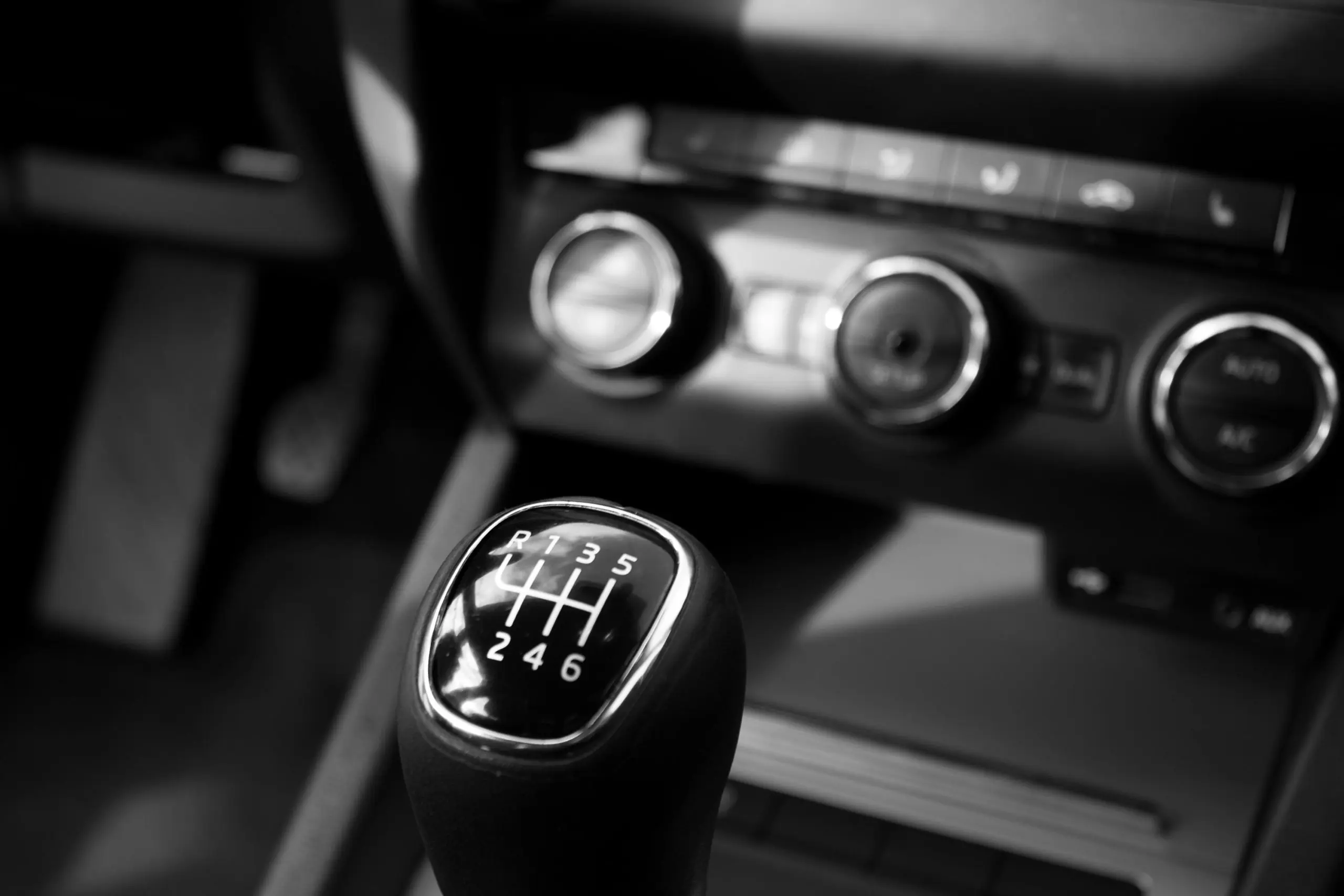
Transmission service
Transmission fluid does two jobs. It cools the gears, and it supplies the hydraulic pressure that applies the clutches inside an automatic. Heat and friction break the fluid down over time. Worn-out fluid thins and loses its grip, and metal parts start rubbing harder against each other.
You'll feel the trouble before you see it. The engine revs up but the car doesn't pick up speed, which is called slipping. Shifts turn harsh, or there's a pause after you pull the lever into drive. Red fluid under the car usually indicates a transmission leak. Check the level before driving and have the source identified promptly.
A fluid service depends on how the transmission is built:
- A transmission with a removable pan is drained, and the pan comes off.
- A new filter and pan gasket go on.
- Fresh fluid goes in to the specified level.
Sealed transmissions with no service pan get their fluid exchanged through the cooler lines that run to the radiator.
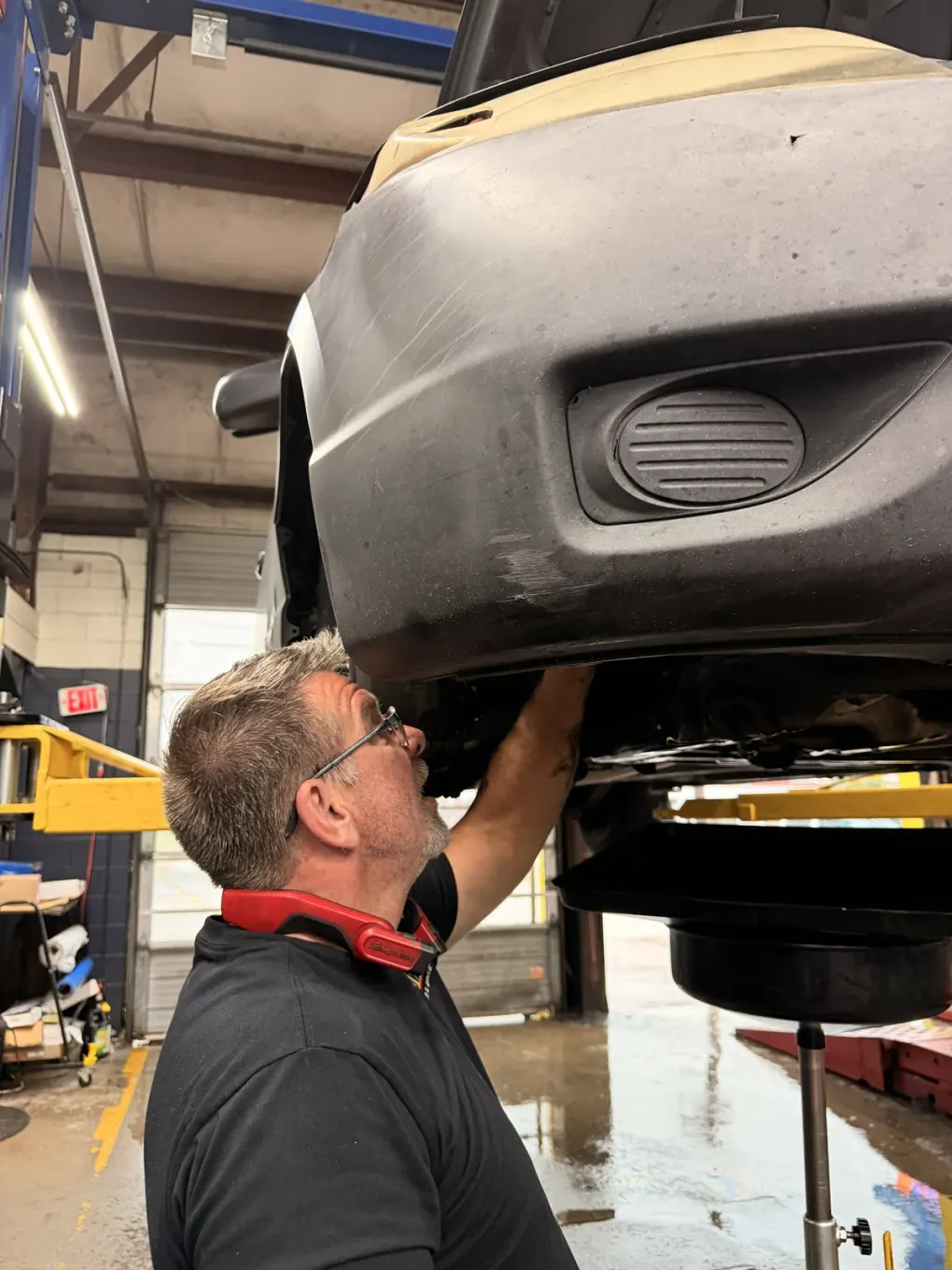
Drivetrain: clutch, differential and driveline
The drivetrain carries power from the transmission to the wheels. On a manual car, that starts at the clutch. When the friction disc wears thin against the flywheel, engine speed climbs under acceleration but the car doesn't speed up with it. A pedal that only catches near the floor, or gears that crunch going in, can point to a leaking hydraulic cylinder or a failing pressure plate.
Underneath the car, the driveshaft and its universal joints carry that torque back to the axle. A worn universal joint often clunks when you shift into drive or reverse. It can also start a vibration at highway speed.
At the axle, the differential splits power between the drive wheels and lets them turn at different speeds through a corner. Worn differential bearings make a whine that changes pitch as you press and release the gas. A leaking pinion seal, the seal where the driveshaft enters the differential, lets gear oil out. With too little oil, the gears run hot and wear themselves out.
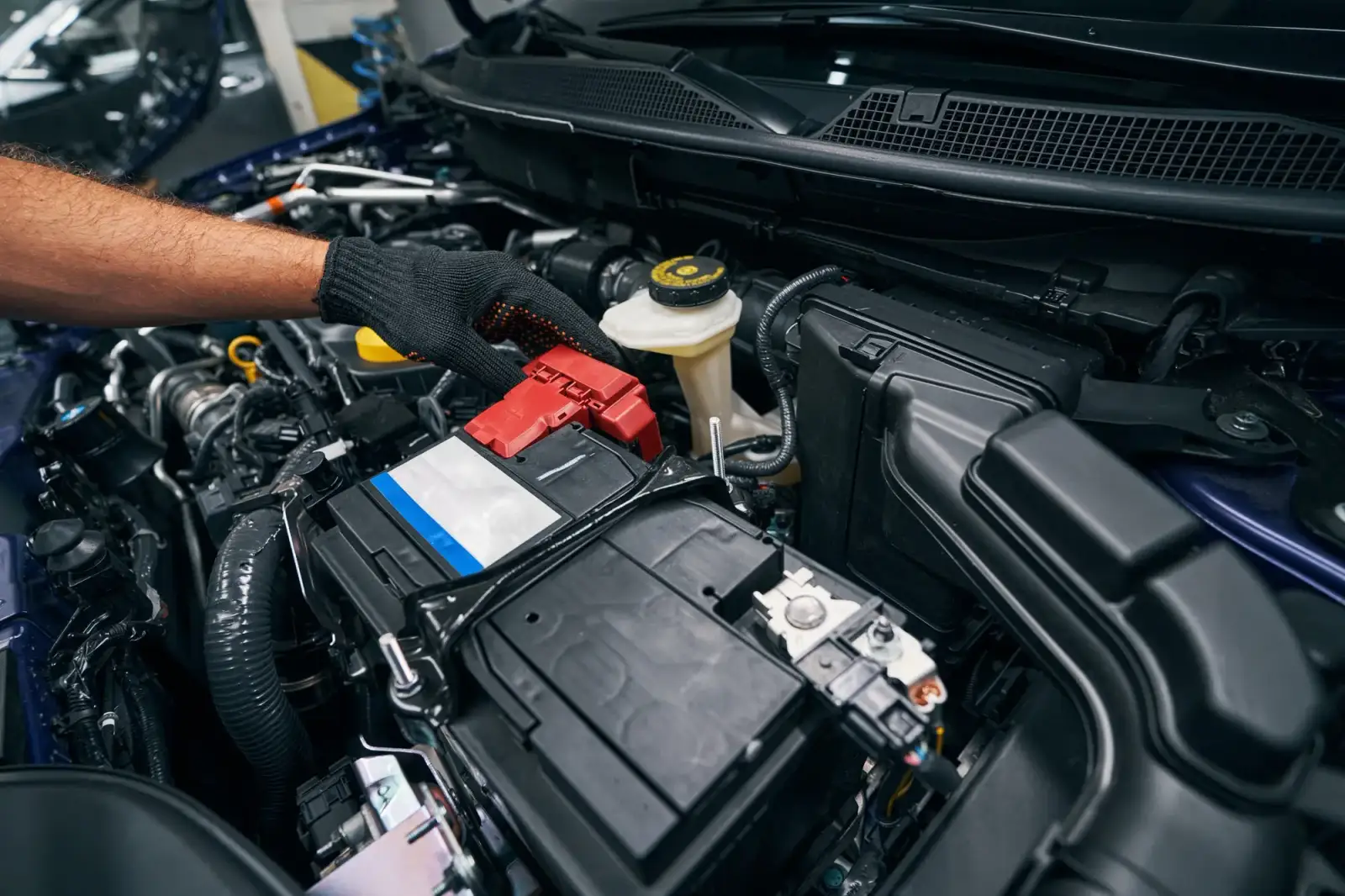
Electrical: battery, starter, alternator and wiring
Starting the car pulls a big burst of current from the battery to spin the starter and crank the engine. Once the engine's running, the alternator takes over. It powers the electronics and recharges the battery for the next start. If the alternator fails, charging voltage drops and the battery carries the whole car by itself until it runs flat. A loose ground strap or a broken wire can cut power just as suddenly.
Electrical repair means tracking down where the voltage drops, where a circuit opens or which part has quit. The signs usually show up at the key. A single fast click, slow cranking or no sound at all are the common ones. Headlights that dim at idle and white or green crust on the battery terminals both mean current isn't flowing cleanly.
A battery/charging light means the car is running on stored charge. Drive directly to a shop or home. The vehicle may stall when the battery depletes.
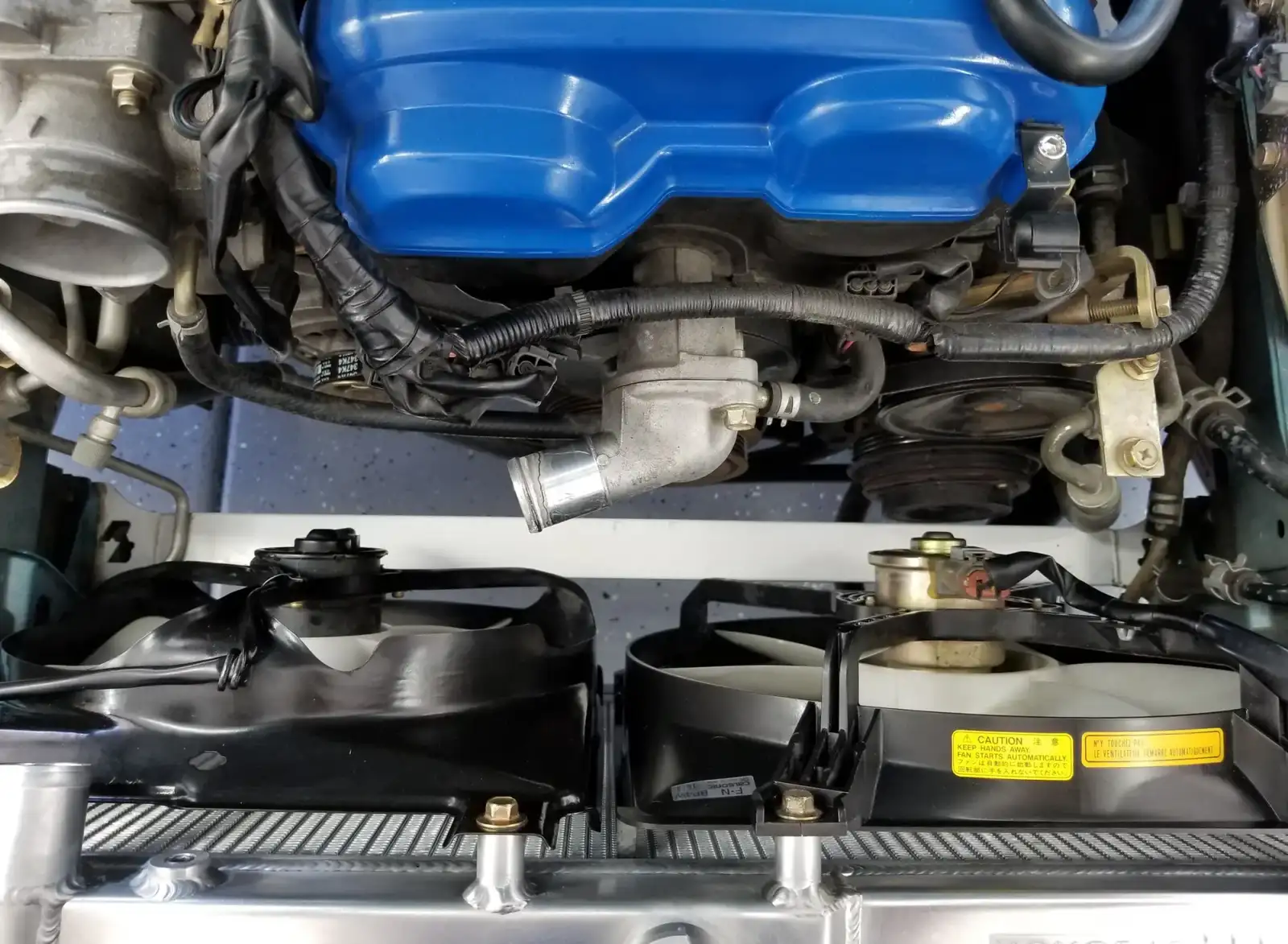
Cooling: radiator, water pump and overheating
Coolant carries heat out of the engine. The water pump pushes hot coolant through the hoses to the radiator, and air passing through the radiator fins cools it before it heads back to the engine. A thermostat between the two opens once the engine warms up. If it sticks shut, coolant can't reach the radiator and the engine overheats.
The other parts wear with heat and time. Rubber hoses go soft or brittle. Water pump seals start to weep coolant. Plastic radiator tanks can crack along their seams under normal system pressure. Once coolant leaks out, air gets into the passages and forms hot spots that don't shed heat. Enough heat can blow the head gasket, the seal between the engine block and the cylinder head.
If the temperature gauge is in the red or you see steam, pull over safely and shut the engine off. Continued driving can cause severe engine damage.
Cooling repair means finding where pressure escapes, replacing the failed part and refilling with fresh coolant. The last step is bleeding the trapped air out, so the coolant can reach every passage again.
Fuel system repair
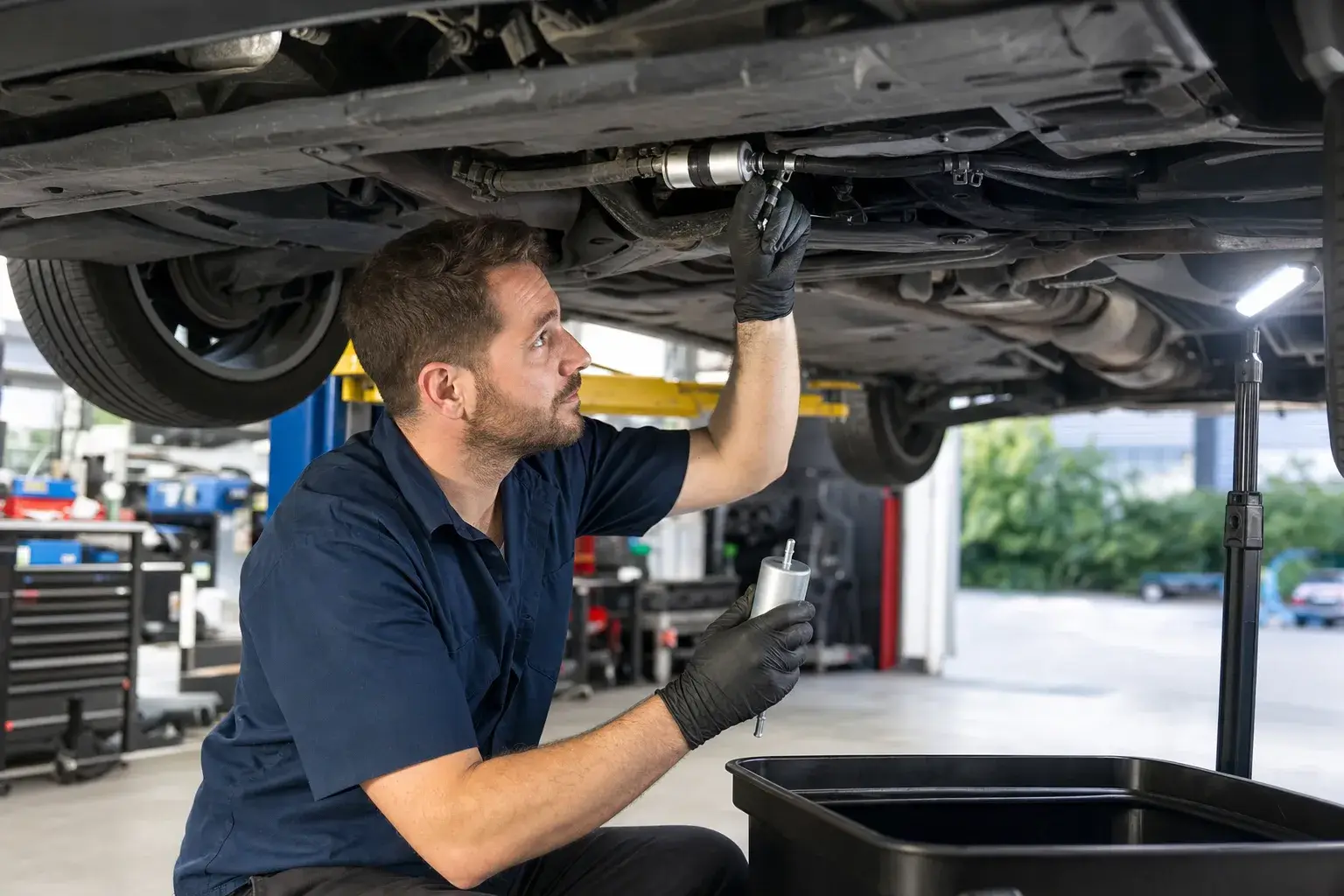
A pump inside the gas tank pushes fuel through the lines and a filter to the engine. The injectors then spray it as a fine mist into each cylinder. When fuel pressure drops, the engine runs short of fuel. You may notice long cranking before it starts, a rough idle or a stumble when you press the gas. A weak pump can also overheat while you drive. The car stalls and may not restart until the pump cools down.
A clogged filter shows up when the engine asks for more fuel, like climbing a hill or passing. Flow can't keep up, power fades and the engine runs lean, meaning too much air for the fuel. That can set a code and turn on the check engine light. Dirty or sticking injectors cause misfires, poor mileage and a raw gas smell at the tailpipe. Cracked fuel lines and dried-out seals are a separate problem. They can leak fuel close to hot engine parts. Fuel system repair runs from checking fuel pressure to replacing the pump, the filter, the injectors or the lines.
Fleet repair
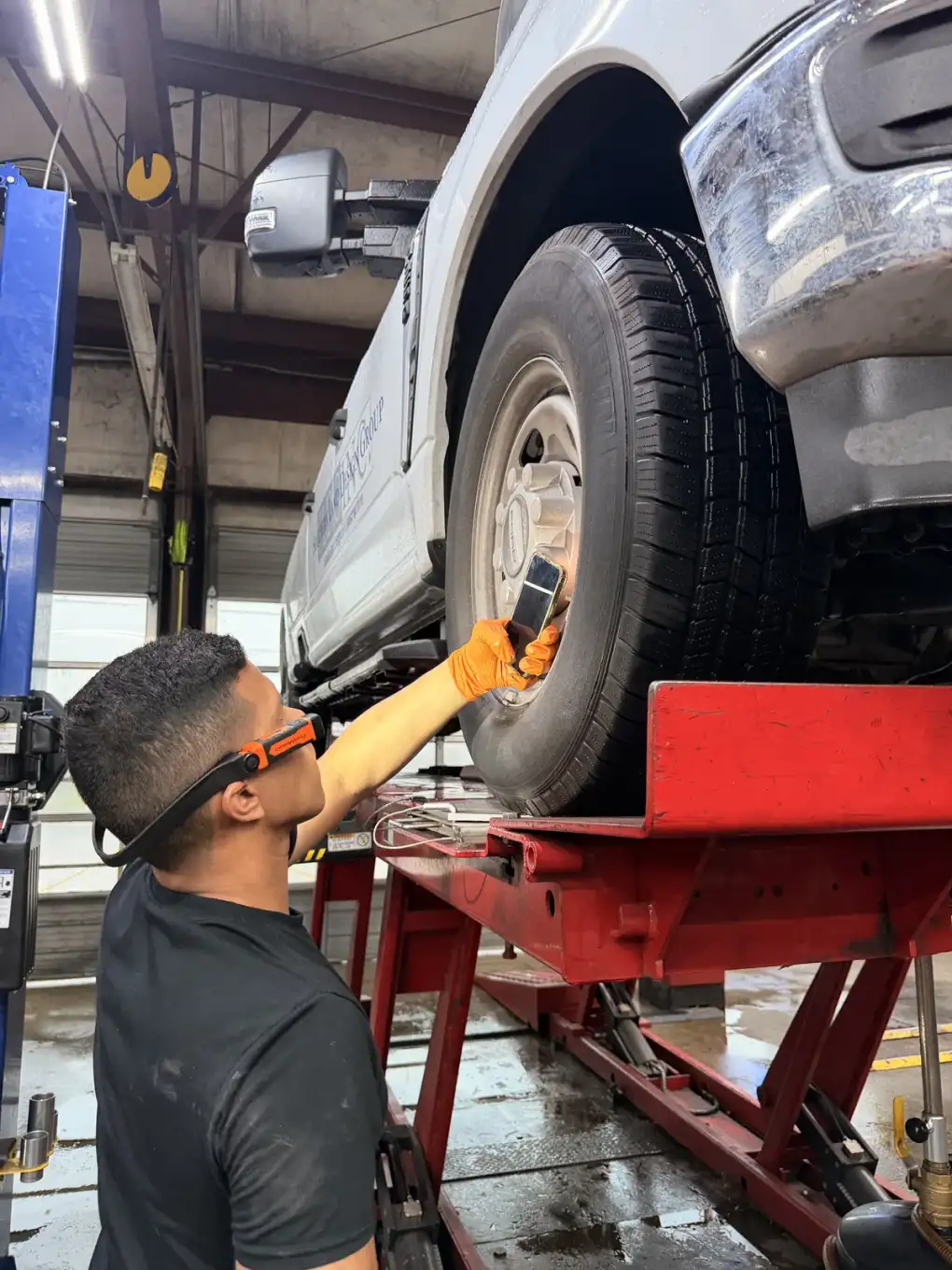
Work vans and fleet trucks haul weight all day, and that weight lands on the brakes and suspension first. Brakes stop a vehicle by turning its motion into heat. A heavier truck makes more heat at every stop, and the pads wear faster. Once a pad wears down to its metal backing plate, that plate cuts into the rotor. A pad replacement then becomes pads and rotors.
Heavy cargo also keeps the leaf springs compressed. Over time, the rubber bushings and the shocks wear out under that load. A driver will feel it as loose steering, extra bounce or a truck that pulls to one side when braking. Squealing brakes are another sign to bring the vehicle in.
Stop-and-go routes are hard on transmissions too. Constant shifting in traffic runs the fluid hot, and hot fluid breaks down sooner. Fleet repair covers the same brake, suspension and fluid service a single car gets, scheduled around the miles and loads your vehicles carry.
Schedule service for your vehicle
You'll find our Houston shop at 5118 Hwy 6 N, Houston, TX 77084. The Houston number is (281) 463-8079. Our Stafford shop sits at 12319 Murphy Rd, Stafford, TX 77477. The Stafford number is (281) 879-0843. Call us, or send us a message.