Houston

(281) 463-8079

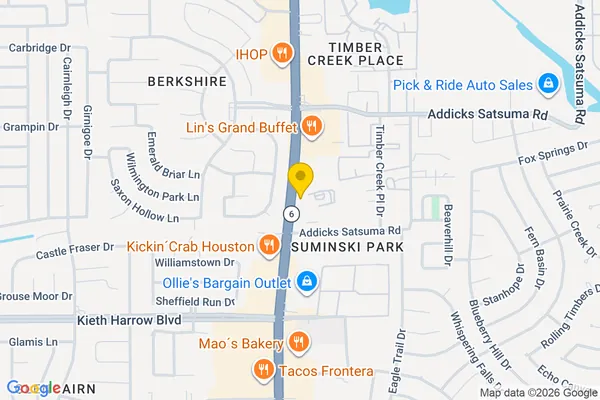
5118 Hwy 6 N, Houston, TX 77084

Mon – Fri: 8 a.m. to 6 p.m.
Sat: 8 a.m. to 5 p.m.

Stafford

(281) 879-0843

12319 Murphy Rd, Stafford, TX 77477

Mon – Fri: 8 a.m. to 6 p.m.
Sat: 8 a.m. to 5 p.m.

Car interior dashboard air vent and light switch. Southwest Muffler & Brake, Stafford and Houston.

Auto air conditioning

Southwest Muffler & Brake repairs car air conditioning at both our shops: 12319 Murphy Rd in Stafford and 5118 Hwy 6 N in Houston.

When your vents blow warm, we find out why, trace the leak and replace the part that failed.

Updated

Close-up of car climate control dials. Southwest Muffler & Brake, Stafford and Houston.

What we do for air conditioning service

We fix car A/C that blows warm, smells musty or makes noise, at our shops in Houston and Stafford. Our two shops have handled more than 2,100 A/C visits combined, at Stafford since 2000 and at Houston since December 2023.

Most of the time, warm air comes back to refrigerant that's gone. Your A/C is a sealed loop. The refrigerant doesn't get used up, so the level only drops when there's an opening somewhere. A worn O-ring, the small rubber seal at a line joint, can let gas seep out. A cracked hose or a punctured condenser can do the same.

That's why we trace leaks and replace failed parts like the compressor, which is the pump that moves refrigerant through the lines. Once the loop is sealed again, the system can hold a fresh charge.

A slow leak is easy to miss. Refrigerant is a gas you can't see, and it rarely leaves a puddle. Your car can lose its charge over several weeks, and the only clue is air that feels a little less cold each day.

Signs you need air conditioning service

Warm air from the dash vents is the sign most drivers notice first. It can mean refrigerant has leaked out. A failed fan or compressor can cause it too. Your system needs a full charge to pull heat out of the cabin air, so cooling fades as the level drops.

Noise is the next clue, and each sound points to a different part.

  • A squeal when the A/C kicks on can mean the drive belt is slipping on the compressor pulley.
  • A rattle from under the hood can come from worn bearings in the compressor.
  • A click that repeats while the air swings between cold and warm can mean the compressor is cycling on and off because pressure is low.

A sour, musty smell has a different cause. Water collects on the evaporator, the cold core behind the dash, and drains out through a small tube. If dirt plugs that tube, water sits in the box and mold can grow.

Weak airflow is its own sign. If the air is cold but barely comes out, the blower fan or a clogged cabin air filter may be at fault. The refrigerant side can be fine.

A leak costs more than comfort. Oil travels through the lines with the refrigerant, so a leak takes oil with it. A compressor that runs low on oil wears its moving parts and can seize. Then a seal or hose repair grows into a new compressor. Bring your car in when you first notice the cooling fade.

Why local driving is hard on air conditioning

Long summers and slow traffic each put their own load on car A/C here, and they wear on different parts.

  • Houston's average highs sit in the 90s from June through September. Hot air under the hood ages the rubber O-rings and hoses that seal the refrigerant lines. They harden over time and can start to seep at the joints.
  • Stop-and-go traffic cuts the airflow across the condenser, the radiator-like part at the front of the car. With less air moving through it, the refrigerant stays hotter and pressure climbs. The compressor then has to work harder to keep up.
  • Long hours with the A/C on mean the compressor clutch engages more often. Each start wears the clutch face and the belt. A worn belt can slip and squeal.
What's included in air conditioning service

Your A/C is one sealed loop, from the compressor under the hood to the evaporator behind the dash. Knowing what each part does makes your estimate easier to read.

  • Compressor: an engine-driven pump that squeezes refrigerant gas and pushes it through the lines. A belt turns its pulley, so a worn belt affects it too.
  • Condenser: sits behind the grille. Air passing through it cools the hot gas until it turns to liquid. Road debris and bent fins can block that airflow.
  • Drier or accumulator: a small canister that catches moisture and dirt in the refrigerant. Moisture left in the loop can form acid that eats at the parts.
  • Expansion valve or orifice tube: a narrow opening that drops the pressure so the liquid turns cold. If it clogs, refrigerant can't flow and the vents warm up.
  • Evaporator: the cold core behind the dash. The blower fan pushes cabin air across it and out your vents.
  • Hoses, seals and service ports: the rubber and fittings that keep the loop closed. A service port is the valve where refrigerant goes in, and it has its own small seal.

How air conditioning service options compare

The real choice is a quick top-off or finding the leak first. A top-off can blow cold for a while. If the gas leaked out once, though, the new charge follows it out the same opening, and the oil goes with it.

Leak tracing finds where the gas escapes, so that spot gets repaired before the system is recharged. It takes more time up front. What you get is a charge that stays put and keeps oil moving through the compressor.

In September 2026, a 2021 Mazda CX-30 left us after air conditioning compressor replacement and leak tracing. If your car needs a new compressor, ask for the leak to be traced on the same visit. A new compressor on a leaking system loses the same oil it depends on.

The same goes if your A/C was recharged before and went warm again. A second top-off on that car is likely to leak out the same way.

How we inspect before air conditioning work

Our A/C visits follow a set order, from what you've noticed to the price in writing.

  1. You tell us what's happening: warm air, a noise, a smell or weak airflow.
  2. We trace the leak if the system has lost refrigerant.
  3. We explain what failed in plain words.
  4. You receive a written estimate before any work begins.

Sometimes a car comes in for A/C and needs other repairs too. Our auto repair services include brake repair and suspension and steering repair.

What air conditioning service costs

A/C repair cost depends on which part failed, where it sits and which refrigerant your car uses.

  • Where the leak is: a seal or service port near the top of the engine bay is quick to reach. An evaporator leak means taking dash panels apart, and that adds labor.
  • Which part failed: a compressor is a bigger part than a seal or a valve, so it raises the parts side of the bill.
  • Debris in the lines: a compressor that seized can shed metal into the system. Clearing it out protects the replacement, and it adds time.
  • Refrigerant type: many newer cars use R-1234yf and many older ones use R-134a. The two are priced differently, so your car's type changes the cost of the charge.
  • How many parts wore together: a leak that ran for months can leave the compressor short on oil. One failed seal can then become a seal and a compressor.
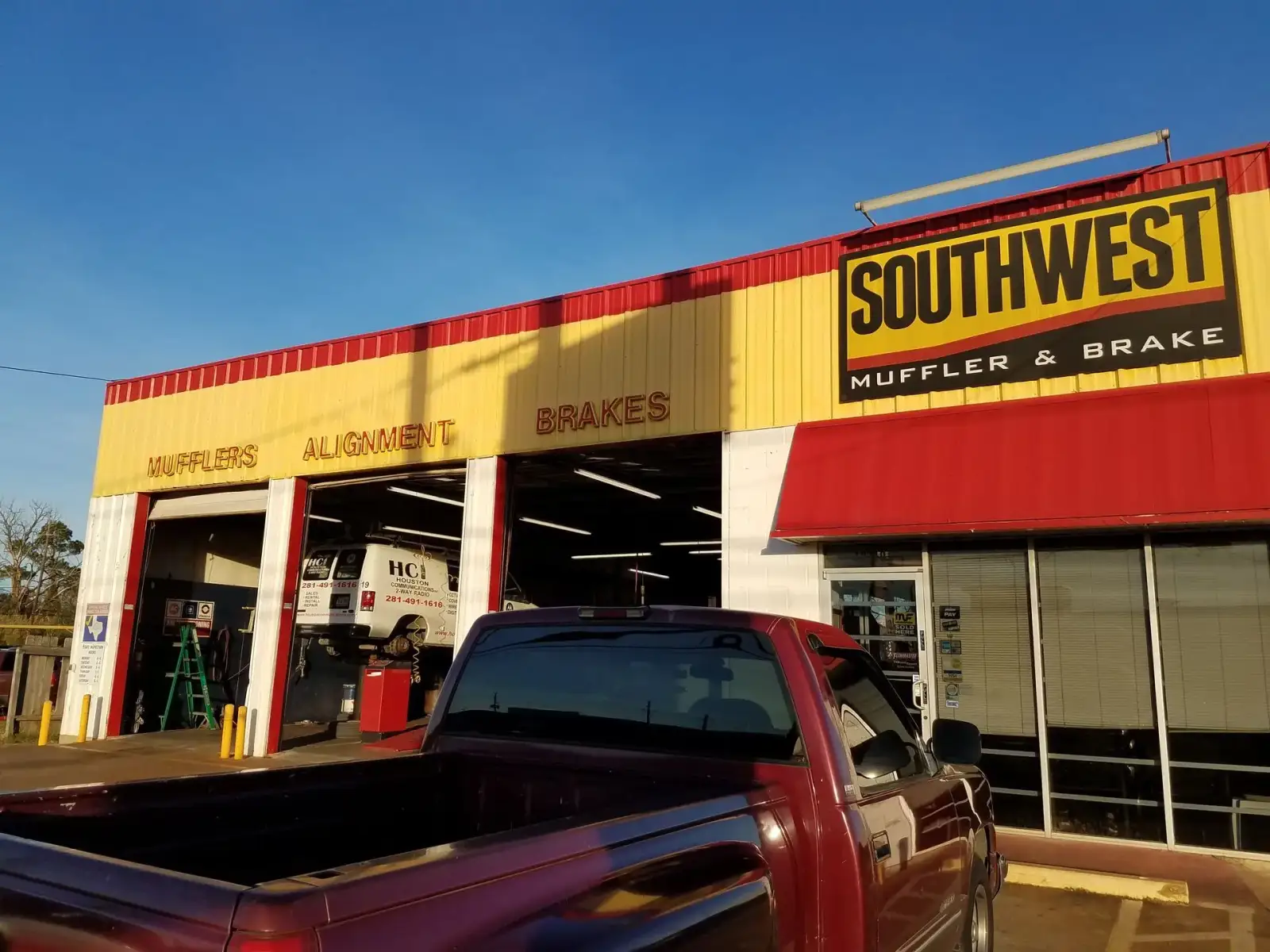
Exterior view of shop garage bays and storefront. Southwest Muffler & Brake, Stafford and Houston.

Why people here choose us for air conditioning service

Our Houston shop has 4.6 stars from more than 400 Google reviews.

Our Stafford shop has 4.5 stars from more than 500 Google reviews.

You can bring your car to our Houston shop or our Stafford shop for A/C repair. We work on many makes, including Chevrolet, GMC and Ford.

Frequently asked questions

Which areas do you serve for air conditioning service?

We do air conditioning service for drivers in Houston and Stafford. You can bring your car to our shop on Hwy 6 N in Houston or our shop on Murphy Rd in Stafford.

Which shop should I go to?

Pick the shop closer to you. Both do A/C work: our shop on Hwy 6 N in Houston and our shop on Murphy Rd in Stafford.

Can I just add refrigerant if my A/C blows warm?

It may help for a short time. Car A/C is a sealed loop and doesn't use up refrigerant, so a low level means gas leaked out somewhere. New refrigerant escapes through the same leak and takes compressor oil with it.

Why does my A/C blow cold on the highway but warm at idle?

At speed, air rushes through the condenser behind the grille and cools the refrigerant. At idle, an electric fan has to move that air. If the fan isn't working or the condenser fins are blocked, the refrigerant stays too hot and the vents warm up until you're moving again.

What causes a musty smell from the vents?

The evaporator behind the dash pulls water out of the air, and that water drains through a small tube under the car. If dirt plugs the tube, water sits in the box. Mold can grow there and blow a sour smell into the cabin.

Why does my A/C rattle when I turn it on?

A rattle that starts with the A/C often comes from the compressor. Worn bearings in the pulley or clutch can rattle under load, and so can worn parts inside the compressor. A compressor that comes apart can send metal through the lines, which turns a one-part repair into a bigger one.

Schedule air conditioning service

Call us, or send us a message.