Houston shop
Went to them few years ago for a muffler delete they did great job. Went back a couple days ago to reinstall my muffler, Tony and his crew was great and they are affordable. I refused to go to any other shop to get work done.
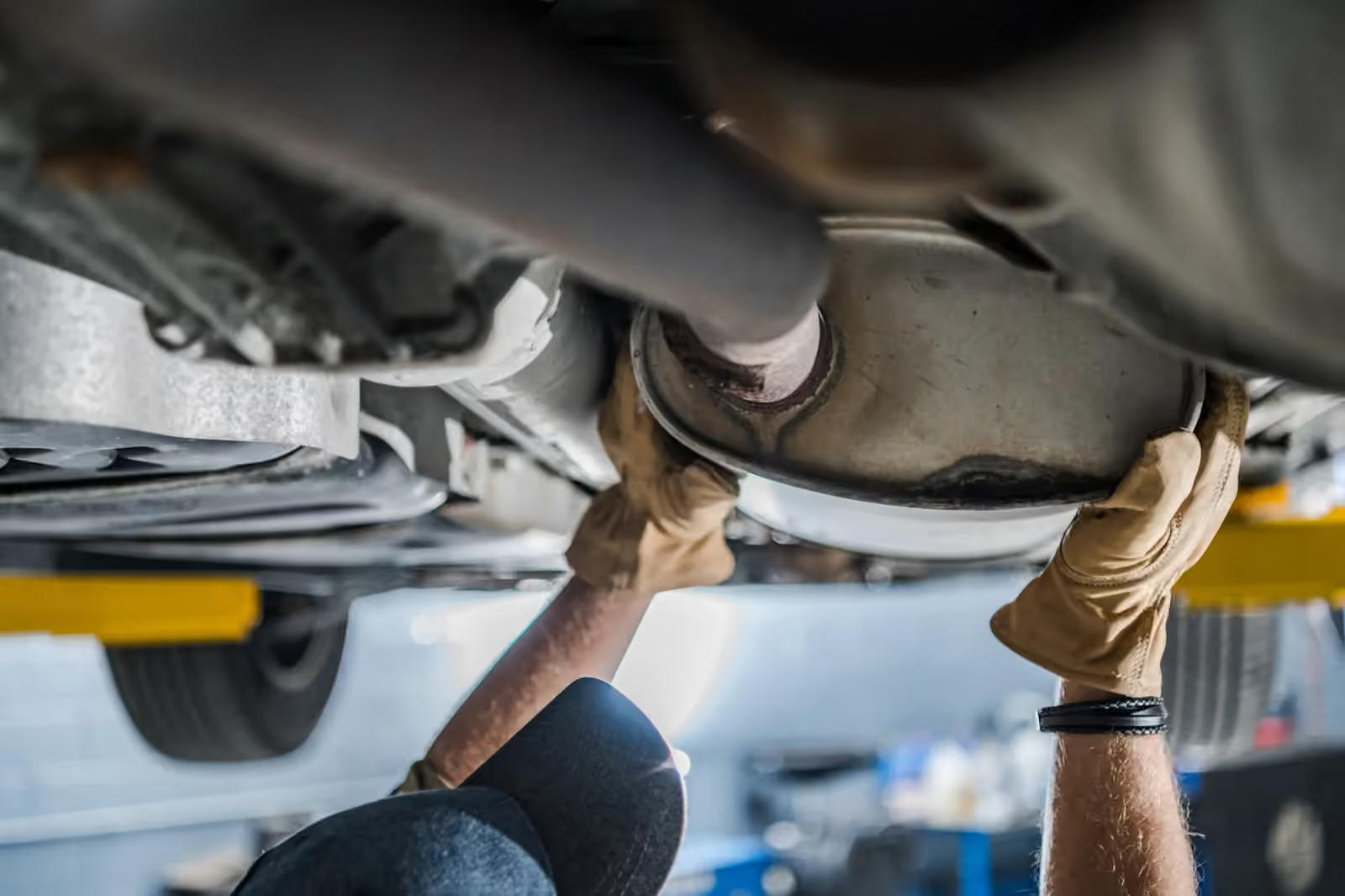
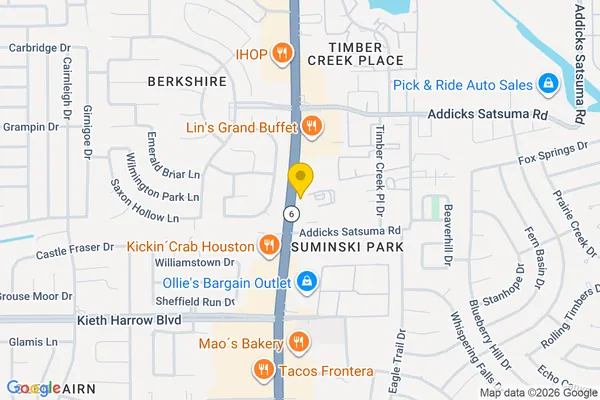
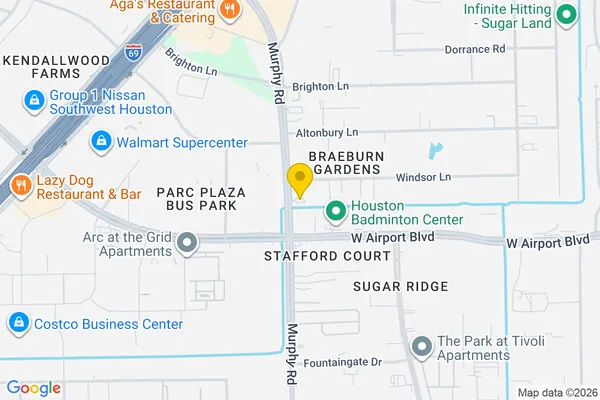
We do muffler and exhaust repair at both our shops, at 5118 Hwy 6 N in Houston and 12319 Murphy Rd in Stafford.
Updated
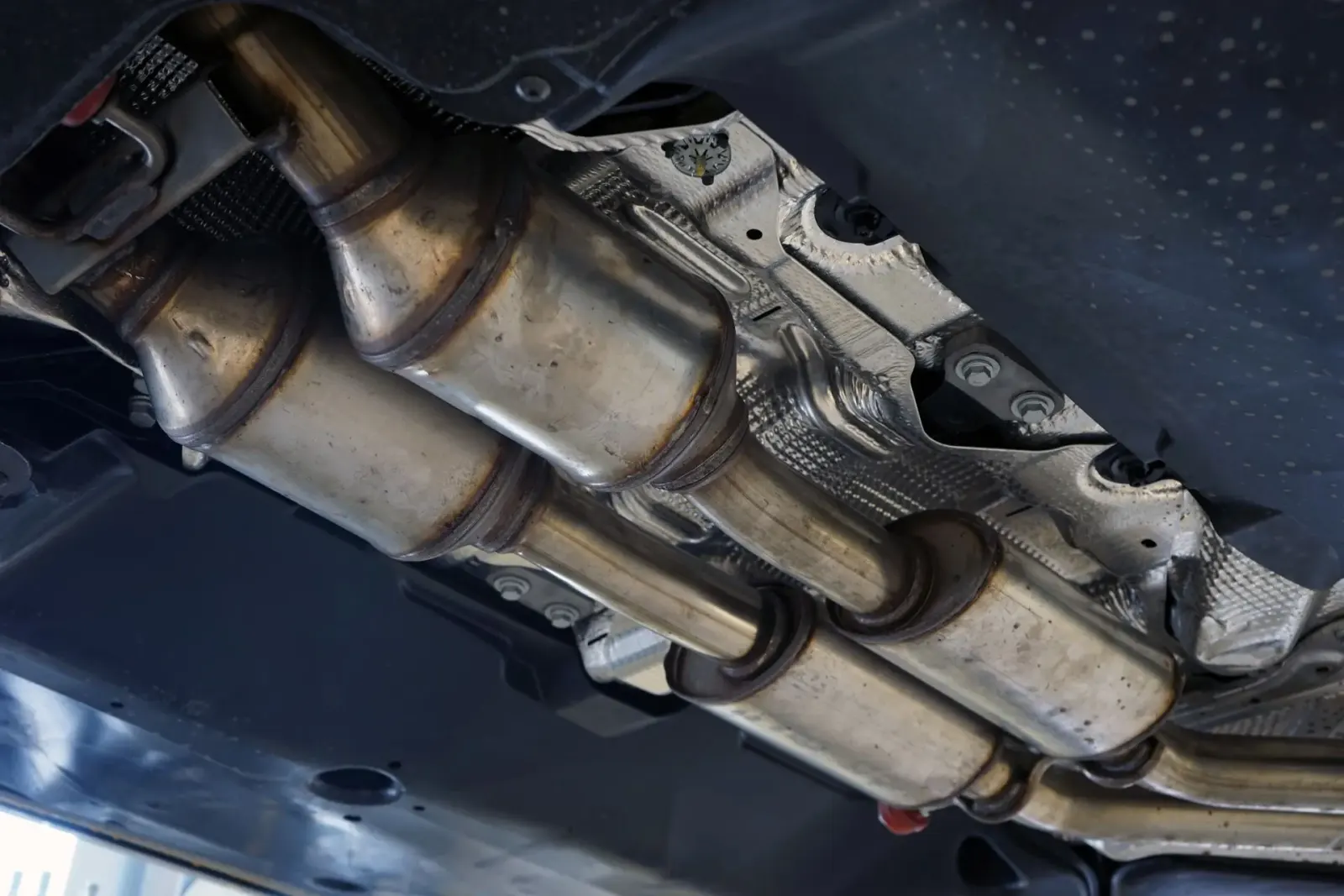
We fix exhaust leaks, replace rusted mufflers, repair cracked pipes and install catalytic converters. Our two shops have handled more than 34,000 muffler and exhaust visits together, at Stafford since 2000 and at Houston since December 2023.
The makes we see most for muffler and exhaust repair are Chevrolet, GMC and Ford.
The sound your car makes helps point to where the exhaust is leaking.
An exhaust smell inside the car is the sign to take most seriously. Gas leaking under the floor can work its way in through body seams and vents. Breathing exhaust fumes can cause headaches and dizziness, so have that leak found promptly.
A scrape or clunk underneath often means a rubber hanger tore or a bracket snapped. With nothing holding it up, the pipe sags toward the pavement. A low pipe can catch on a bump and pull other sections loose.
Short trips and the Texas summer each bear on a different part of the exhaust.
Your exhaust is a sealed path that carries hot gas from the engine to the back bumper. A repair fixes the part on that path that cracked, rusted or broke.
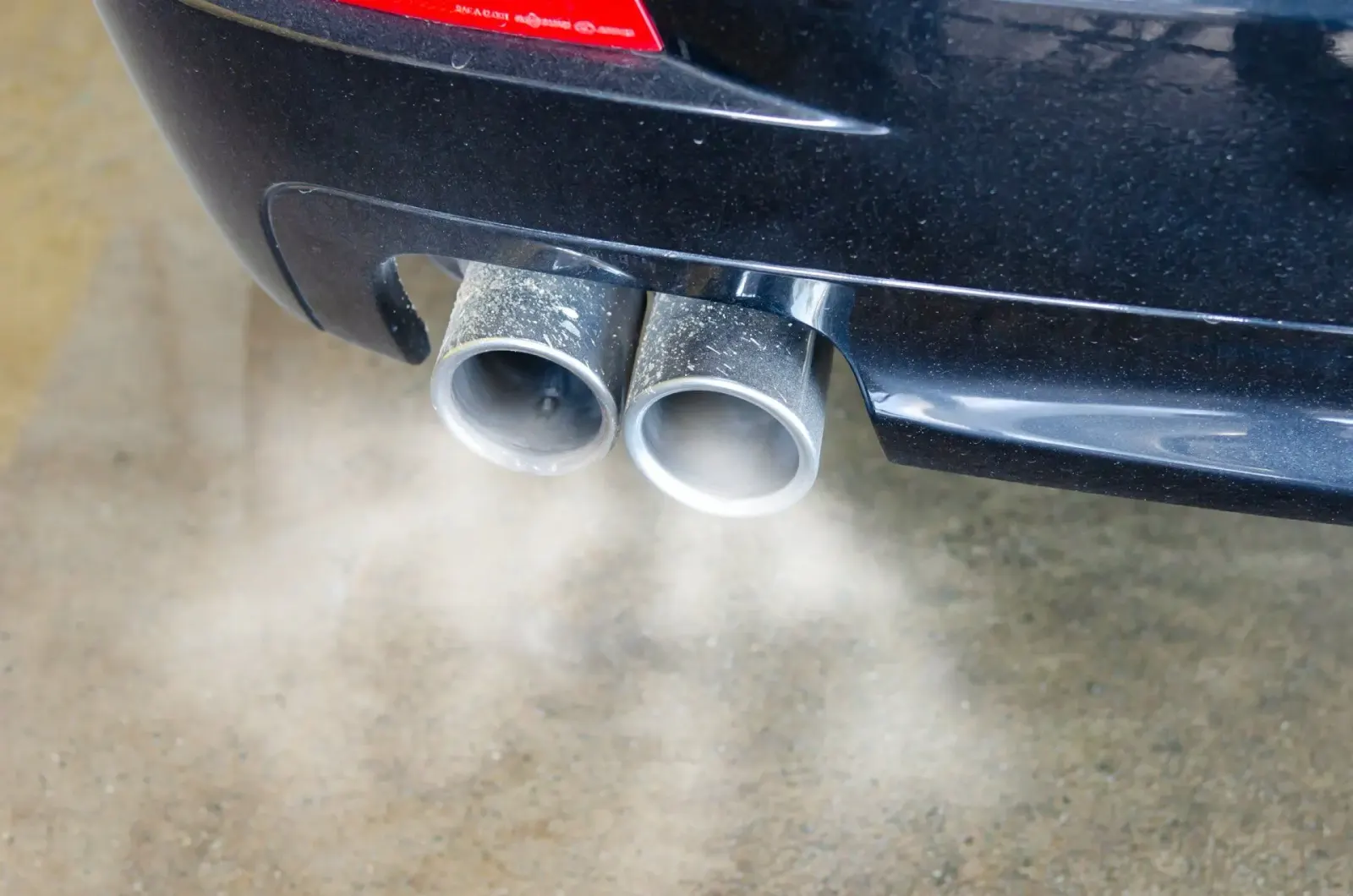
A muffler quiets the engine by sending exhaust pulses through chambers and tubes that break up the sound. A resonator sits ahead of it and cuts the hum you'd hear at highway speed.
Both sit toward the back of the car, where the gas has cooled and water collects inside the shell. That water rusts the steel from the inside, so a muffler can look fine and still be rotting. The thin inner walls, called baffles, can break loose over time. The rubber hangers age, crack and tear.
Each failure has its own sound. A rusted-through muffler makes a deep roar that grows as you speed up. A loose baffle rattles inside the case, often at idle. A broken hanger lets the muffler knock the floor or hang low.
To replace one, we cut the old unit off the pipe and weld or clamp the new one into the line. Fresh rubber hangers hold it in place and soak up vibration before it reaches the body.
A catalytic converter cleans exhaust gas before it exits the tailpipe. Inside its metal shell, a ceramic honeycomb breaks down harmful gas.
Converters fail from engine trouble upstream or from impact underneath the car.
You may hear a rattle underneath as broken pieces shake in the housing. Sulfur the converter can't treat smells like rotten eggs. Sensors can turn on the check engine light. A clogged core holds back exhaust, and you feel that as lost power when you accelerate.
We replace catalytic converters at both shops.
Exhaust leaks start at joints and at the parts that move. A manifold gasket can burn through where the manifold meets the engine, and that gap makes the tick you hear on the gas. Farther back, the flex pipe bends as the engine rocks on its mounts, and that motion can crack it over time. Road spray rusts clamps and the bolted joints where pipes meet.
Noise is only part of the problem. Exhaust escaping under the floor can reach the cabin. A torn hanger or snapped rod lets a pipe drop, and a dragging pipe can bend tubing or crack a joint farther forward.
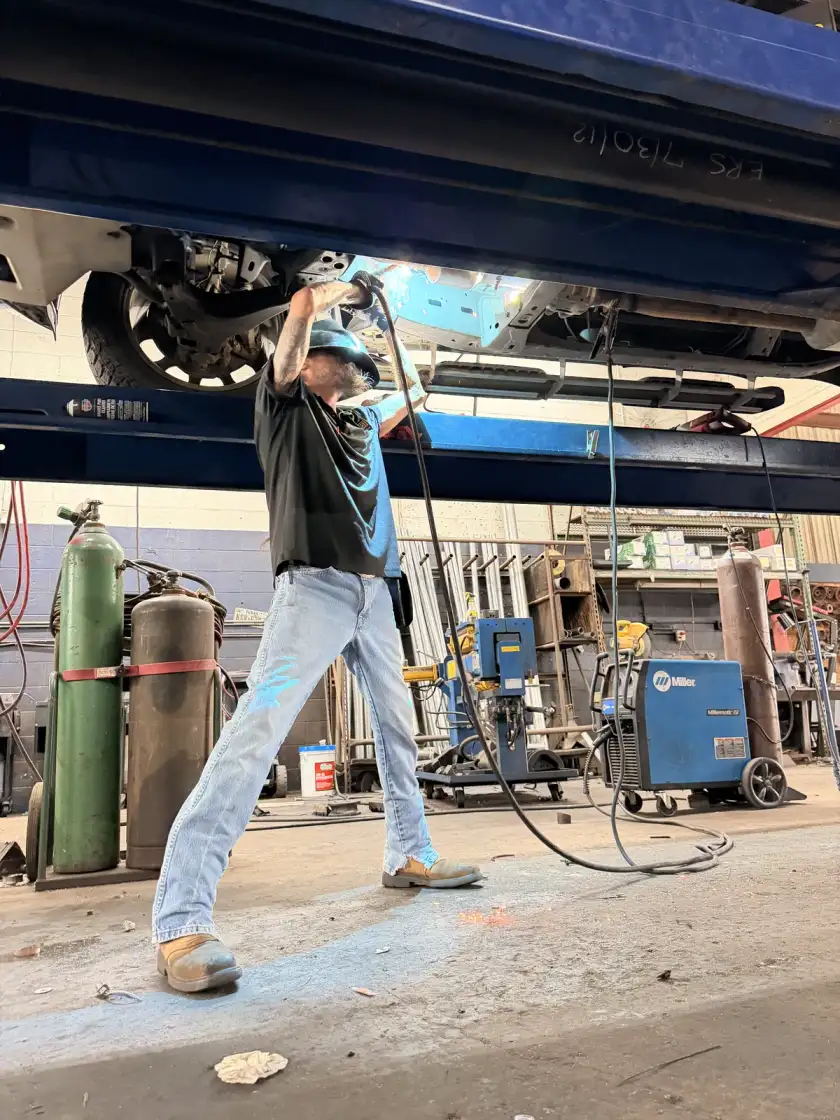
We find leaks with the car up on a lift, working from the engine back to the tailpipe. Escaping gas leaves black soot around cracked welds, loose clamps and blown gaskets. A bad gasket gets replaced with new hardware at the joint. A torn flex pipe gets cut out and a new section welded in. A broken hanger rod gets a new one welded on, with fresh rubber mounts.
A cat-back exhaust replaces everything from the catalytic converter back to the bumper. That usually means the muffler and rear pipes, often with wider tubing and larger tips. Most drivers pick one for the sound, a deeper tone when you press the gas.
The manifold and the catalytic converter stay as they are. A cat-back system won't clear a check engine light, fix a rough idle or cure a misfire. It won't stop an engine from burning oil either. If your car has one of those problems, that repair comes first, and a cat-back is a choice for later.
A torn hanger or a gasket is a small part. A catalytic converter costs more because its core uses precious metals. A muffler usually falls between the two. Stainless steel parts cost more than standard steel.
Reach changes labor time. A rear muffler sits in the open. A manifold is tucked against the engine, often behind heat shields. If rusted manifold bolts snap, drilling out the broken pieces adds time.
The joints matter too. Bolted joints come apart with hand tools. Welded joints mean cutting out the bad steel and welding in a new section. A dual exhaust has two sets of pipes and mufflers, which adds parts and labor.
Our Houston shop has 4.6 stars from more than 400 Google reviews.
Our Stafford shop has 4.5 stars from more than 500 Google reviews.
Houston muffler and exhaust customers have left 56 reviews, averaging 4.4 stars. You can read what customers say in their own words.
Went to them few years ago for a muffler delete they did great job. Went back a couple days ago to reinstall my muffler, Tony and his crew was great and they are affordable. I refused to go to any other shop to get work done.
Fast service. Had me in and out in no time. I went there to fix a muffler that was on it's last leg.
I have been coming to southwest for years and they are hands down the best muffler and break shop around. Would recommend anytime.
We serve drivers in Houston and Stafford, with a shop in each city. Both shops repair exhaust leaks, pipes, mufflers and catalytic converters.
The closer one. Our shop on Hwy 6 N in Houston and our shop on Murphy Rd in Stafford both repair exhausts.
More gas flows through the exhaust as you speed up, so any leak gets louder. A blown gasket, a cracked flex pipe or a rusted-out muffler can all cause it. A tick near the engine points to the front of the system. A roar under the floor points toward the muffler.
The smell comes from sulfur in the exhaust that a working catalytic converter normally treats. It can mean the converter is worn out. It can also mean the engine is sending the converter too much fuel. Only an inspection tells which one it is.
It can when the metal around the crack is still strong. A clean crack can be welded or covered with a steel sleeve. If rust has thinned the pipe wall, weld heat burns through it. Then the weak section gets cut out and new pipe welded in.
Not always. The muffler and resonator are separate cases joined by a length of pipe, and each one rusts at its own pace. If only one has a hole or a loose baffle, that case can be cut out and a new one fitted into the same line.
Call us, or send us a message.